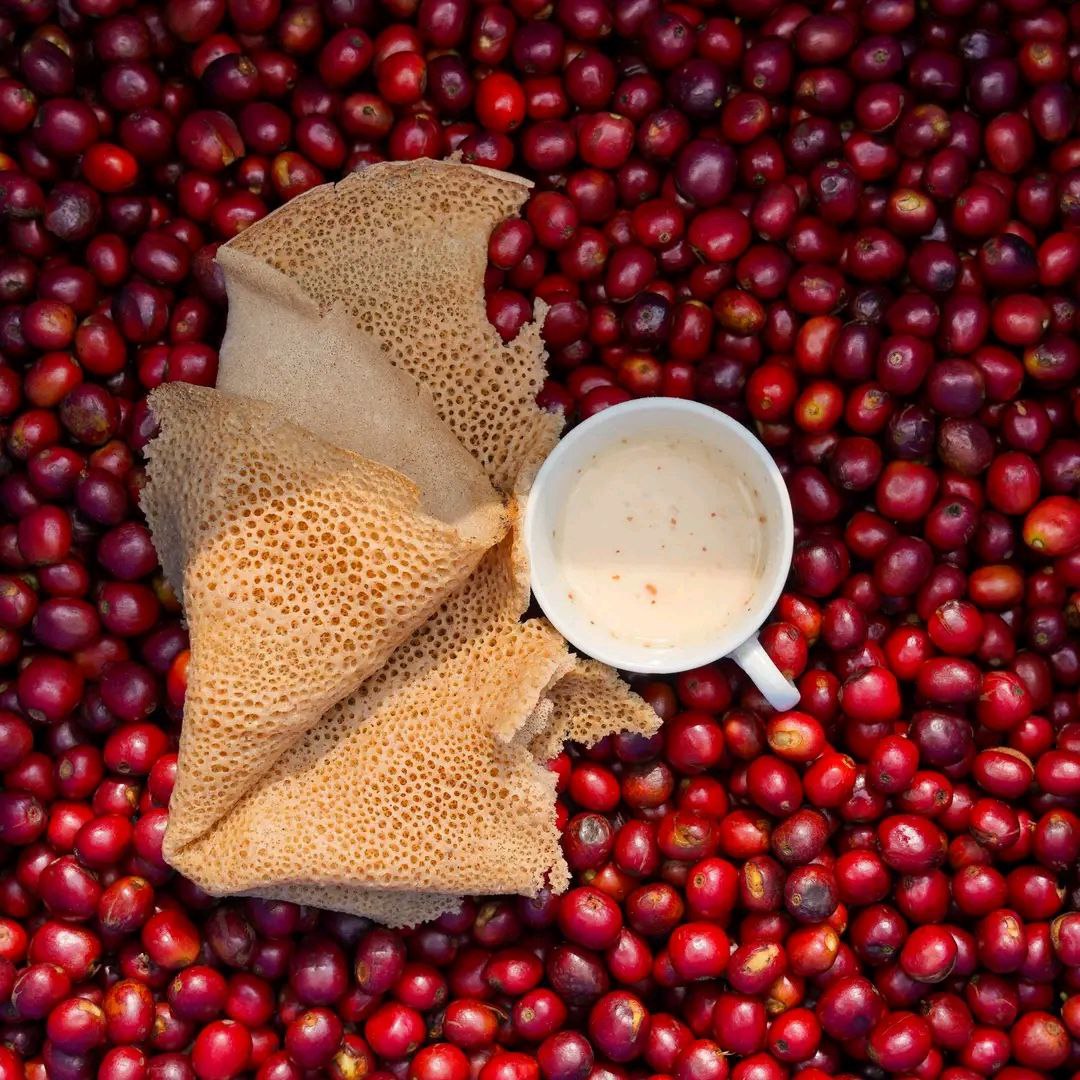
Ethiopia is widely recognized as the birthplace of Coffea arabica, the species responsible for much of the world's finest coffee. Coffee is deeply connected to the country's history, culture, landscapes, and everyday life. For generations, coffee has been more than a drink in Ethiopia—it has been a way of bringing people together.
One of the most famous stories about coffee begins with Kaldi, a goat herder who, according to legend, noticed his goats becoming energetic after eating red coffee cherries. Whether the story is legend or history, it reflects the deep and ancient connection between Ethiopia and coffee.
In Ethiopia, coffee is part of daily life and an important expression of hospitality. When visitors arrive at an Ethiopian home, they may be welcomed with a traditional coffee ceremony. Green coffee beans are carefully roasted, ground, and brewed before being served in small cups. The ceremony is often accompanied by conversation, traditional snacks, and the gentle aroma of freshly roasted coffee.
Ethiopia's coffee story is also a story of extraordinary landscapes and diversity. Coffee is cultivated across different regions, including Yirgacheffe, Sidama, Guji, Harar, Jimma, and Limu. Each area produces coffee with its own distinctive characteristics, influenced by altitude, climate, soil, coffee varieties, farming practices, and processing methods.
Many coffee farms are found among Ethiopia's beautiful highlands and forests, where smallholder farmers carefully cultivate and harvest their coffee. A journey through these regions offers travelers an opportunity to see where coffee begins, meet the people who produce it, and experience the communities and landscapes that surround the farms.
Behind every cup of Ethiopian coffee are thousands of farmers and families whose knowledge and hard work make the journey from coffee cherry to finished cup possible. Coffee cherries are harvested, processed, dried, sorted, roasted, and eventually brewed. Every stage contributes to the final character and flavor.
Ethiopian coffee is famous around the world for its remarkable diversity.
Depending on its origin and processing method, it can have floral, fruity, citrus, wine-like, chocolate, or spicy characteristics. This diversity is one of the reasons Ethiopian coffee continues to attract coffee lovers from around the world.
But experiencing Ethiopian coffee is about much more than tasting different flavors. It is about understanding the people, traditions, landscapes, and stories behind the cup. A coffee journey can take you from a highland farm to a local community and finally to a traditional coffee ceremony, where coffee becomes an experience rather than simply a beverage.
For Twsta, coffee is one of the best ways to discover Ethiopia. Through our coffee experiences, we invite travelers to go beyond the cup—to meet the people, explore the landscapes, experience the traditions, and discover the story behind Ethiopian coffee.
Ethiopian coffee is not simply something you drink. It is a story you taste—a story of land, people, culture, tradition, and memory.
Conversation
Comments
Share your experience or ask a question about this route.
Waww..... very nice!